Commercial Waste Removal in Cranford

Commercial waste removal in Cranford helps businesses keep premises clear, workable and ready for daily trade. Whether you need routine collections, one-off clearances or help dealing with mixed non-hazardous waste, our service is designed to remove unwanted material without disrupting the way your site operates. We handle practical, everyday waste streams with a focus on tidy loading, sensible sorting and straightforward arrangements that suit offices, shops, workshops and shared business spaces.
The work can cover office furniture, packaging, broken fixtures, redundant stock, light refurbishment waste and other items that are no longer needed on site. If you are reviewing a unit, moving teams, or making space after a clear-out, our commercial waste removal service gives you one place to send the job. For background on wider service options, you can also read about our business waste removal approach and compare the sort of loads we normally handle.
Start with a simple description of the waste, the access available and the size of the load, then ask for a quotation that reflects the actual work involved. If you already know the item type, that helps us plan the right collection. If you do not, a short explanation is still useful. Clear details at the outset usually make the next step easier, especially where waste is mixed or includes heavier pieces that need careful handling.
What we remove from commercial premises
Our service is aimed at common non-hazardous commercial waste rather than specialist industrial contamination. That means we can usually help with desks, chairs, shelving, filing cabinets, packaging, broken fittings, display materials, partitioning, and general office or retail clearance items. We also deal with many types of redundant equipment and bulky furniture, provided it is safe to load and suitable for lawful disposal. The important point is that the removal is arranged around your business use of the space, not the other way round.
Different premises produce different waste, so the best result often comes from matching the collection to the load type. For example, an office refresh may need mixed furniture disposal and bagged rubbish removal, while a stockroom clear-out may involve more packaging, damaged display stock and dismantled shelving. If you want to compare individual item pages, our office clearance and furniture disposal pages explain those service areas in more detail.
For larger clearances, it is sensible to think in terms of categories rather than single objects. A short list can make the quotation more accurate, and it can also help you decide whether the job is best handled as a targeted removal or as a broader site clearance. Mixed loads are often simpler than they first appear once the different item groups are identified.
Clearance work for offices, units and shared spaces

Commercial waste removal is often part of a change in how a premises is used. Office moves, tenant changes, light refits and stock room reorganisations all create waste that cannot simply be left in place. In those situations, we focus on clearing the practical obstacles: old furniture, loose debris, redundant fittings and anything else that is taking up room without serving a purpose. The aim is to leave the area ready for the next stage of work, not to turn it into a general maintenance project.
When the job involves desks or business furniture, the clearance can be planned around access routes, loading points and the items that need to go first. This matters in shared buildings where corridors, lifts or common entrances must stay usable. You may also want to combine the work with information from our furniture clearance and flat clearance pages if the premises include staff accommodation, a managed unit or a mixed-use area with household-style contents.
We can usually help with one-off removals as well as repeat business clearances, depending on the nature of the waste and how regularly it builds up. The best plan is the one that keeps your site moving without filling rooms, corridors or loading bays with redundant material. If the job is time-sensitive, explain that in plain terms so the collection can be scoped properly from the start.
Business waste types and how they are handled
Not every commercial clearance looks the same, and the handling should reflect that. Paperwork-heavy offices may produce a lot of packaging and obsolete stationery; retail spaces may have display units, damaged stock or redundant signage; light trade premises may generate offcuts, shelving or worn-out furnishings. Our role is to remove the items safely and separate out what can be sorted for appropriate processing. When you know the waste type, the request can be narrower and more accurate.
Some customers prefer to review a dedicated route before they book. For example, if the work is focused on a workplace rather than general premises, our business waste removal page is the best starting point, while waste removal covers the broader service category. These pages can help you decide whether your load is better described as a business collection, a site clearance or a general mixed waste job.
If you are unsure how to describe the material, think about whether it is mostly furniture, mixed debris, or small loose items. That distinction matters because loading effort, handling time and disposal arrangements can vary. Keep the explanation straightforward and avoid guessing at categories that do not fit. A brief, honest description is usually enough to begin.
Planning a collection around your working day
Many commercial jobs need to fit around opening hours, deliveries, customers or staff movement. Good planning is therefore less about making the process complicated and more about reducing disruption. If waste is already stacked in one place, that is helpful; if it is spread across several rooms, say so early. The more the collection matches the reality on site, the smoother the removal is likely to be.
Useful information usually includes the item type, approximate volume, floor level, and whether there is straightforward access for loading. If there are narrow stairways, lift restrictions or shared entrances, mention those too. You do not need to over-explain, but the practical facts matter. For enquiries that focus on costs, our pricing and quotes page gives a clear route to the sort of information that helps shape an accurate estimate.
A short checklist can help before you send details:
- identify the main item groups
- note any bulky or awkward pieces
- describe access and floor level
- mention anything that must be handled separately
Sorting, recycling and responsible disposal
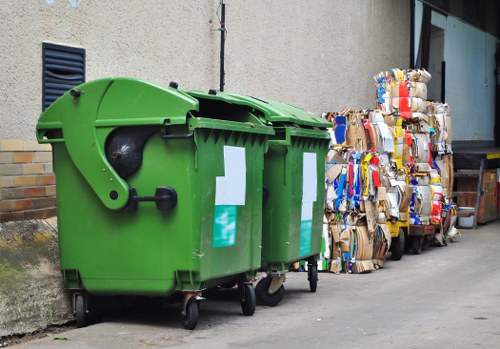
Commercial waste removal is not only about taking items away. It also involves deciding what can be separated and what needs to be processed as waste. Offices and businesses often produce a mix of recyclable material, reusable furniture and general rubbish, so the job is more efficient when those streams are not blended unnecessarily. Good sorting at the collection stage supports cleaner handling later on and avoids treating every item as though it were the same.
If sustainability is an important part of your waste planning, you may want to review our recycling and sustainability page. It sets out the general approach to recycling-focused processing, while the clearance itself remains guided by the actual contents of your load. There is also a separate page for confidential shredding where paperwork disposal needs an extra level of attention and should not be mixed with ordinary office rubbish.
Responsible disposal is often helped by a simple decision tree: keep reusable items separate where possible, identify anything sensitive, and flag material that is likely to need special handling. That approach makes it easier to match the right removal method to the waste in front of you. It also helps you avoid over-ordering a service that is more than the job actually requires.
Types of commercial property we can help with
Our service suits a range of premises where waste must be removed with care and without unnecessary disruption. That includes offices, shops, storage units, workshops, light industrial spaces, managed buildings and premises that are being altered for a new tenant or different use. The exact contents may vary, but the organising principle is the same: remove what is no longer needed, keep access workable and deal with the load in a sensible way.
When a property has multiple areas, it can be useful to treat the removal in stages. Front-of-house furniture, back-office items, storage overflow and leftover fit-out materials may all need different treatment even if they are being cleared on the same day. If you are also dealing with domestic-style contents in a mixed property, our home clearance and house clearance pages show how those broader clearances are described.
Not every job needs a full premises strip-out. Sometimes the most efficient choice is a targeted removal of the items causing the blockage or clutter. That may be a single room, a storage corner, a reception area or a cluster of redundant fixtures. The key is to be accurate about what remains and what must go.
About Cranford

Cranford is an area in the London Borough of Hounslow, close to the boundary with the Borough of Hillingdon and near the western approach to Heathrow Airport. Historically, it developed as a village on the River Crane, and the river still forms part of its identity through the landscape and local naming. The area is connected to older Middlesex settlement patterns, yet today it sits within the wider suburban fabric of west London. Its roads, housing and open spaces reflect that layered history, where earlier village origins sit beside later urban growth and transport change.
One of the best-known landmarks is Cranford Park, a sizeable public green space with historic associations and walking routes around the River Crane. The park gives the area a more open character than many surrounding districts and helps define the local landscape. Cranford also has notable heritage buildings and older street patterns, including St Dunstan’s Church, which is associated with the historic village core. The nearby transport network has had a strong influence on how the area is perceived, with the M4 and airport-related routes passing close by and giving the district a distinctly west London position.
Local life in Cranford is shaped by a mix of residential streets, passing traffic, and the broader airport corridor to the west. The River Crane valley adds a natural thread through the area, linking Cranford Park with other green spaces along the river’s course. Although it is now part of a much larger metropolitan setting, the name still carries echoes of the original settlement by the water. That balance of older village character, public open space and urban connectivity gives Cranford a clear identity within the borough.
Choosing the right scope for the load
Once you know what needs to go, the next step is deciding whether the job is best handled as a simple removal or a broader clearance. A simple removal works well for a defined group of items, such as a few desks, a set of chairs or a pile of packaging. A broader clearance makes more sense where waste is distributed through several rooms or where the contents are mixed and harder to categorise. The right choice is the one that matches the actual load.
Some customers also need related item-specific help. If the load includes unwanted appliances, our fridge and appliance removal page is relevant, while bulky soft furnishings may sit more naturally under mattress and sofa disposal. These pages are useful when a job contains a mixture of furniture and specialist household-style items that need to be described separately. You can use them to frame the enquiry, even where the collection remains commercial in context.
Be careful not to overspecify the job in a way that hides useful distinctions. For example, an office clearance with a few household-style items is not the same as a domestic clearance with one office chair. Accurate scoping keeps the service appropriate and helps avoid confusion when the load is assessed.
Preparing for quotation and collection
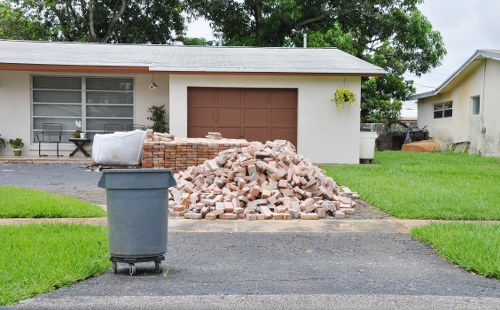
To request a quotation, keep your description short but complete. A good message usually states what the premises are, what needs removing, where the waste is located and whether access is straightforward. If you have photographs or an item list, they can support the description, but they are not the whole story. The best enquiries combine a concise summary with practical facts such as floor level, parking constraints or whether lifting equipment would be needed.
It also helps to separate must-go items from things that may stay if the price or timing changes. That distinction keeps the request focused and avoids unnecessary back-and-forth. If you prefer to arrange a collection online, you can use our book online page as a direct route into the process, or begin with contact us if you would rather describe the work first and ask for a quotation in plain terms.
Request a quotation when you are ready, and include only the details that affect the job itself. If the load is mixed, awkward or spread through more than one area, mention that clearly so the right approach can be suggested. A straightforward request usually leads to a clearer and more useful answer.
Commercial waste removal for ongoing and one-off needs
Some businesses need help once, after a clear-out, move or refurbishment. Others need occasional collections when waste begins to build up. Our commercial waste removal service can suit either pattern, provided the waste type is suitable and the scope is described properly. The practical advantage is having a reliable way to remove unwanted material without letting it spill into everyday work areas.
Where ongoing waste planning is part of your operation, it may be worth reviewing related company information such as about us, insurance and safety and health and safety policy to understand how the wider service is presented. These pages do not replace the quotation process, but they can help you assess which kind of clearance support is most appropriate for your premises and the way they are used.
If you are comparing options, remember that the best service is the one that matches the actual load, access and timing. You do not need to force your job into a broad category if a narrower description works better. Give the facts, choose the relevant page if you want more detail, and then ask for a quote in the simplest way available.